报告题目:Crystal phase control of low-dimensional metal nanomaterials for electrocatalytic applications
报告时间:1月16日下午15:30
报告地点:5B-201
报告人:范战西
主办单位:材料科学与工程学院
报告人简介:
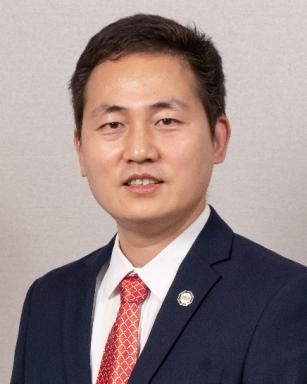
Zhanxi FAN is currently an Associate Professor in City University of Hong Kong. His research interest lies in the fields of materials chemistry, nanoscience, catalysis, and energy conversion. Currently, he mainly focuses on the controlled synthesis of novel low-dimensional metal-based nanomaterials and their potential applications in catalysis, clean energy, environmental remediation, etc. He has published 139 SCI papers with a total citation of over 22500 and H index of 68, including 68 corresponding/first-authored papers in PNAS (3), Nat. Rev. Chem., Nat. Protoc., Nat. Commun. (5), Chem. Soc. Rev. (2), Acc. Chem. Res. (2), J. Am. Chem. Soc. (5), Angew. Chem. Int. Ed. (5), Adv. Mater. (7), CCS Chem., Matter (2), etc. Based on these works, he has been rated/honored as a “Highly Cited Researcher” by Web of Science for 7 years, a “IAAM Fellow” by The International Association of Advanced Materials (IAAM), a “Top 2% of the World’s Most Cited Scholar” by Stanford University for 6 years, a “Rising Star” by both Advanced Materials and Small in 2022, a “Vebleo Fellow” by Vebleo in 2021, an “Emerging Investigator” by J. Mater. Chem. A in 2021, and is also a recipient of multiple awards including the “Young Scientist Award” from European Materials Research Society (E-MRS) in 2015, “MSE Doctorate Research Excellence Award” from Nanyang Technological University in 2016, and “Chinese Government Award for Outstanding Self-financed Students Abroad” from CSC in 2015.
内容简介:
As a cornerstone supporting the development of modern industry, catalytic technology plays an indispensable role in the synthesis of chemical materials, directional conversion of target (toxic/hazardous) substances, and energy regeneration and utilization. Among them, electrocatalysis has become the core technology for the development of next-generation energy systems and devices (such as electrochemical carbon dioxide reduction, nitrate reduction, metal-gas batteries, etc) by converting clean electrical energy into chemical energy, which can effectively cope with the increasingly tense global environmental and energy challenges. As a key part of electrocatalysis, the structural design and regulation of catalysts greatly determine the product conversion efficiency and selectivity of the entire system. In this presentation, I will introduce the latest progress of our research group in the crystal phase control of low-dimensional metal nanomaterials and their electrocatalytic applications, mainly including the following three aspects: (1) Template growth of unusual phase metal heteronanostructures; (2) One-pot synthesis of unusual phase alloy nanostructures; (3) Electrocatalytic applications in multi-electron transfer reactions.